Prep Time: 2 Minutes
Cook Time: 10–15 Minutes
Total Time: 12–17 Minutes
Intensity: Low
Ingredients
-
Fresh Nettle Leaves: 1 cup, loosely packed (washed).
-
OR Dried Nettle Leaves: 2 tablespoons (crushed).
-
Filtered Water: 8–10 oz (1 cup to 1.25 cups).
-
Optional Add-ins: A slice of lemon (helps absorb iron), a teaspoon of raw honey, or a pinch of mint for flavor.
Equipment
-
Tea kettle or small saucepan.
-
Teapot or heat-proof mug.
-
Tea infuser, strainer, or French press.
-
Gloves (if handling fresh nettles).
Instructions
1. The Boil:
Bring your filtered water to a rolling boil. The temperature should be approximately 200°F to 212°F (93°C to 100°C). A vigorous boil ensures the cell walls of the nettle leaves break down effectively.
2. The Steep (The Critical Phase):
If using a teapot or French press, place your nettle leaves at the bottom. Pour the hot water over the leaves. If using a mug, place the leaves in an infuser and pour water over them.
3. The Timing (Intensity Control):
This is where you control the “intensity” of the brew.
-
Light Intensity (5–7 Minutes): Produces a mild, grassy tea similar to green tea. Best for those new to the flavor.
-
Medium Intensity (10–12 Minutes): This is the standard steep. It produces a robust, earthy flavor and a darker color.
-
High Intensity/Medicinal (20–30 Minutes): This creates a strong, slightly bitter infusion. This is often used for maximum mineral extraction. If you steep this long, the tea may become slightly astringent.
4. The Strain:
If you are using loose leaves in a pot, pour the tea through a fine mesh strainer into your mug. Press the leaves gently with the back of a spoon to squeeze out the last nutrient-rich drops.
5. The Finish:
Add your optional honey or lemon. Lemon is highly recommended if you are drinking nettle tea for iron supplementation, as Vitamin C significantly increases iron absorption.
Part 3: Serving and Flavor Profile
Yield: 1 Serving
Serving Temperature: Hot, or iced (see below).
Flavor Profile:
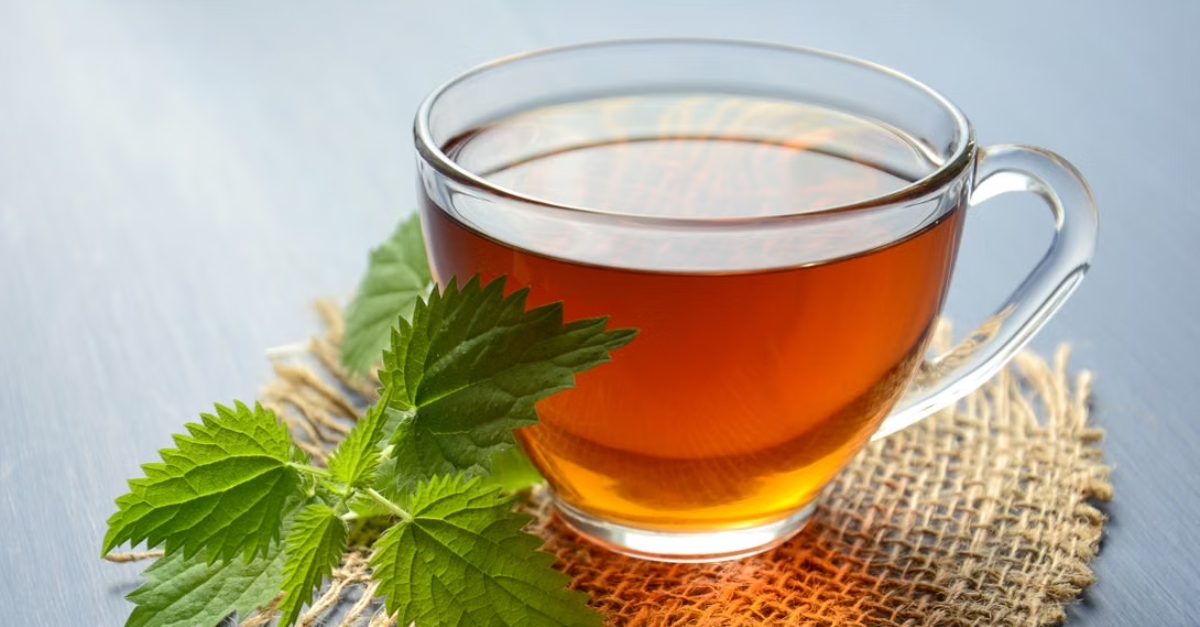
Stinging nettle tea has a distinct profile. It is often described as:
-
Earthy: Like a walk in a damp forest.
-
Grassy: Similar to wheatgrass or matcha.
-
Vegetal: Reminiscent of spinach water (in a good way).
-
Slightly Salty: Due to the natural mineral content.
It lacks the bitterness of black tea and the sweetness of herbal fruit teas. It is a savory brew. If you find the “green” taste too strong, blending it with peppermint or spearmint is a classic herbalist trick.
Iced Nettle Tea Variation:
To make a refreshing summer drink, brew a double-strength batch (steep 15 minutes), remove the leaves, and pour the tea over a glass filled with ice. Add a sprig of fresh mint and a slice of cucumber for a spa-like beverage.
Part 4: Nutrition Facts and Health Benefits
Stinging nettle is often referred to as a “multivitamin” in plant form. While the exact nutritional profile varies based on soil quality and harvest time, the following is an approximation of the nutrients found in a strong cup (8 oz) of nettle tea.
Estimated Nutrition Facts (Per 8 oz / 240 ml serving):
-
Calories: 2–5
-
Carbohydrates: < 1g
-
Protein: < 1g
-
Fat: 0g
-
Fiber: 0g (some fiber remains in the leaf, not the water)
-
Caffeine: 0mg
Key Vitamins & Minerals (Approximate % Daily Value):
-
Vitamin K: High (Crucial for blood clotting and bone health).
-
Vitamin A (Beta-Carotene): High (Essential for vision and skin).
-
Vitamin C: Moderate (Immune support).
-
Calcium: Moderate (Bone health).
-
Iron: Moderate (Oxygen transport).
-
Magnesium: Moderate (Muscle and nerve function).
-
Potassium: Moderate (Fluid balance).