Prep time: 10 minutes | Cook time: 30–35 minutes | Total time: 45 minutes
Equipment
-
Large heavy-bottomed saucepan or Dutch oven
-
Wooden spoon or silicone spatula
-
Potato masher
-
Small plate (for testing set)
-
Sterilized glass jars with lids
-
Wide-mouth funnel (optional)
Instructions
Step 1: Prepare the Berries (5 minutes | Low intensity)
Place the rinsed blueberries in your heavy-bottomed saucepan. Add the water and use a potato masher to crush about half of the berries, leaving the rest whole for texture. The water prevents sticking before the berries release their own juices.
Step 2: Add Remaining Ingredients (2 minutes | Low intensity)
Add the honey, lemon juice, lemon zest, and pinch of salt to the pot. Stir gently with a wooden spoon to combine. The lemon juice is essential — it provides the acid needed for proper gelling and brightens the flavor.
Step 3: Macerate (10 minutes | No heat)
Let the mixture sit at room temperature for 10 minutes. This allows the berries to release their juices and the honey to dissolve, resulting in a more even cook.
Step 4: Bring to a Simmer (5 minutes | Medium heat)
Place the pot over medium heat and bring the mixture to a gentle simmer, stirring occasionally. Watch carefully as it heats — honey-rich mixtures can foam up quickly. If foam rises, skim it off with a spoon and discard.
Step 5: Cook Down (20–25 minutes | Medium-low heat)
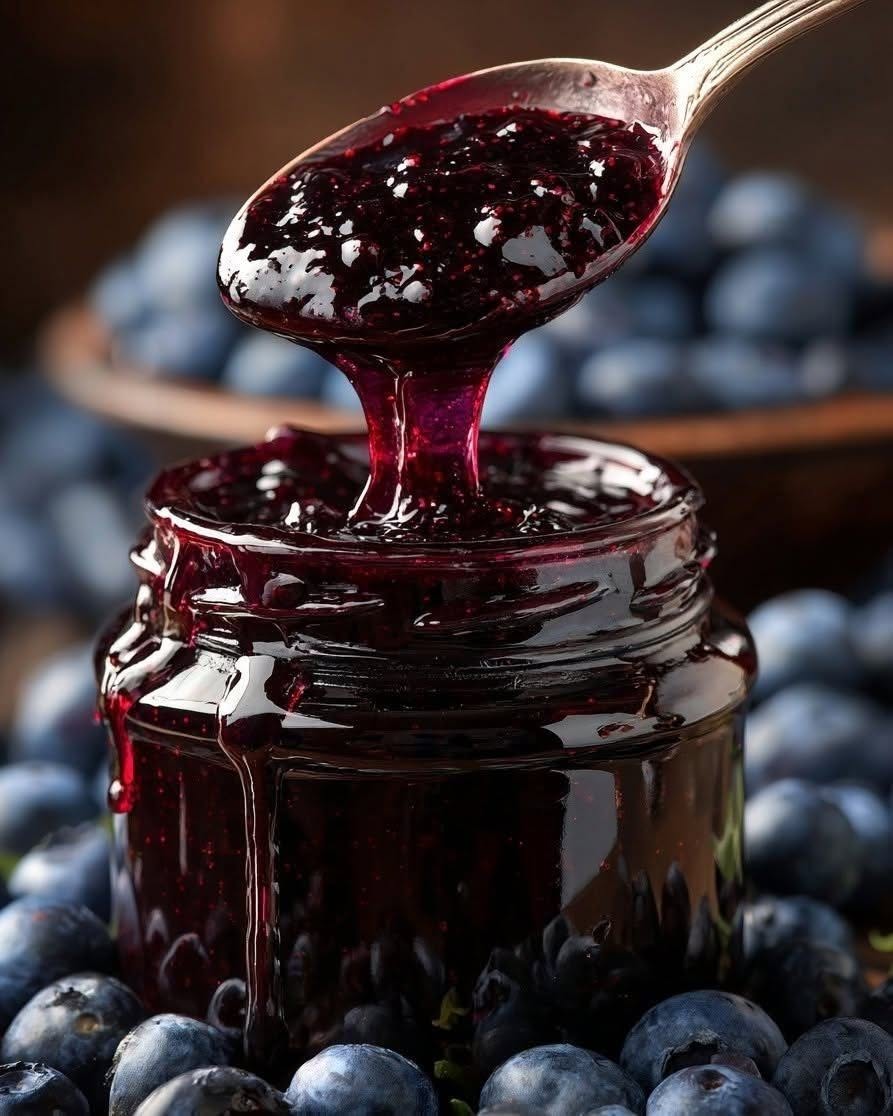
Reduce the heat to medium-low and maintain a steady, gentle simmer. Stir every few minutes to prevent scorching, scraping the bottom of the pot. The jam will gradually thicken and darken to a deep purple. You’ll notice the mixture reducing and the bubbles becoming larger and slower.
Timing cue: After 20 minutes, begin testing for set.
Step 6: Test for Set (2 minutes | Low intensity)
Spoon a small amount of jam onto a chilled plate and return it to the freezer for 1–2 minutes. Run your finger through the cooled jam — if it wrinkles and holds its shape without immediately running back together, it’s ready. If it’s still runny, continue cooking in 3-minute increments and retest.
Note: Because honey jams set slightly softer than sugar-based jams, aim for a “soft set” — the jam will continue to thicken as it cools.
Step 7: Fill the Jars (5 minutes | Medium intensity — work quickly while hot)
Carefully ladle the hot jam into sterilized jars, leaving ½ cm (¼ inch) headspace. Use a wide-mouth funnel to avoid spills. Wipe the rims with a clean, damp cloth, then seal tightly with sterilized lids.
Step 8: Cool and Store (2 hours, unattended | No heat)
Let the jars cool completely at room temperature — you may hear a satisfying “pop” as the lids seal. Store sealed jars in the refrigerator for up to 3 weeks, or process in a water bath for 10 minutes for shelf-stable storage up to 1 year.
Recipe Notes & Tips
-
Adjust sweetness: Taste the raw mixture before cooking. If your berries are very sweet, reduce honey to 90 ml (⅓ cup). If they’re tart, increase slightly.
-
Don’t double the batch: Small batches cook more evenly and set better. Make two separate batches instead.
-
Frozen berries work well: No need to thaw — simply add 2–3 extra minutes to the cook time.
-
Honey varieties matter: A mild clover honey lets the blueberries shine; a stronger wildflower honey adds complexity.
-
Watch the heat: Honey scorches faster than sugar. Never let the jam boil vigorously.
Nutrition Information
Serving size: 1 tablespoon (approximately 20 g) | Servings per recipe: ~32
| Nutrient | Amount per Serving |
|---|---|
| Calories | 38 kcal |
| Total Fat | 0.1 g |
| Sodium | 3 mg |
| Total Carbohydrates | 9.7 g |
| — Dietary Fiber | 0.7 g |
| — Total Sugars | 8.5 g |
| Protein | 0.2 g |
| Vitamin C | 2.3 mg |
| Vitamin K | 4.8 µg |
| Manganese | 0.08 mg |