-
Prep Time: 5 minutes
-
Cook Time: 15-20 minutes
-
Total Time: 25 minutes
-
Intensity Level: Moderate – This recipe requires your full attention. The sugar can go from perfect golden caramel to burnt and bitter in a matter of seconds. Constant vigilance is key!
Step-by-Step Instructions
1. Prepare Your Ingredients (Mise en Place):
Before you begin, have all your ingredients measured and ready. This is crucial because the caramel-making process moves quickly. Warm the heavy cream in a microwave or a small saucepan until it’s hot to the touch but not boiling. Set it aside. Have your butter, vanilla, and salt ready nearby.
2. Melt the Sugar:
In a heavy-bottomed, medium-sized saucepan (a light-colored one is best so you can see the color of the caramel), combine the granulated sugar and water. Stir gently with a wooden spoon or a silicone whisk just until the sugar is moistened. Place the pan over medium heat.
3. Bring to a Boil:
Bring the mixture to a boil without stirring. Once it starts boiling, you can gently swirl the pan occasionally to help the sugar dissolve evenly. Do not stir with a utensil, as this can splash sugar crystals up the sides of the pan and cause crystallization.
4. Watch for the Color Change:
Continue to boil. The mixture will bubble vigorously, and the water will evaporate. After about 5-8 minutes, the sugar will begin to turn a light golden color. This is where you need to watch it like a hawk. The color will deepen quickly from pale yellow to a rich amber.
5. Achieve the Perfect Amber Color:
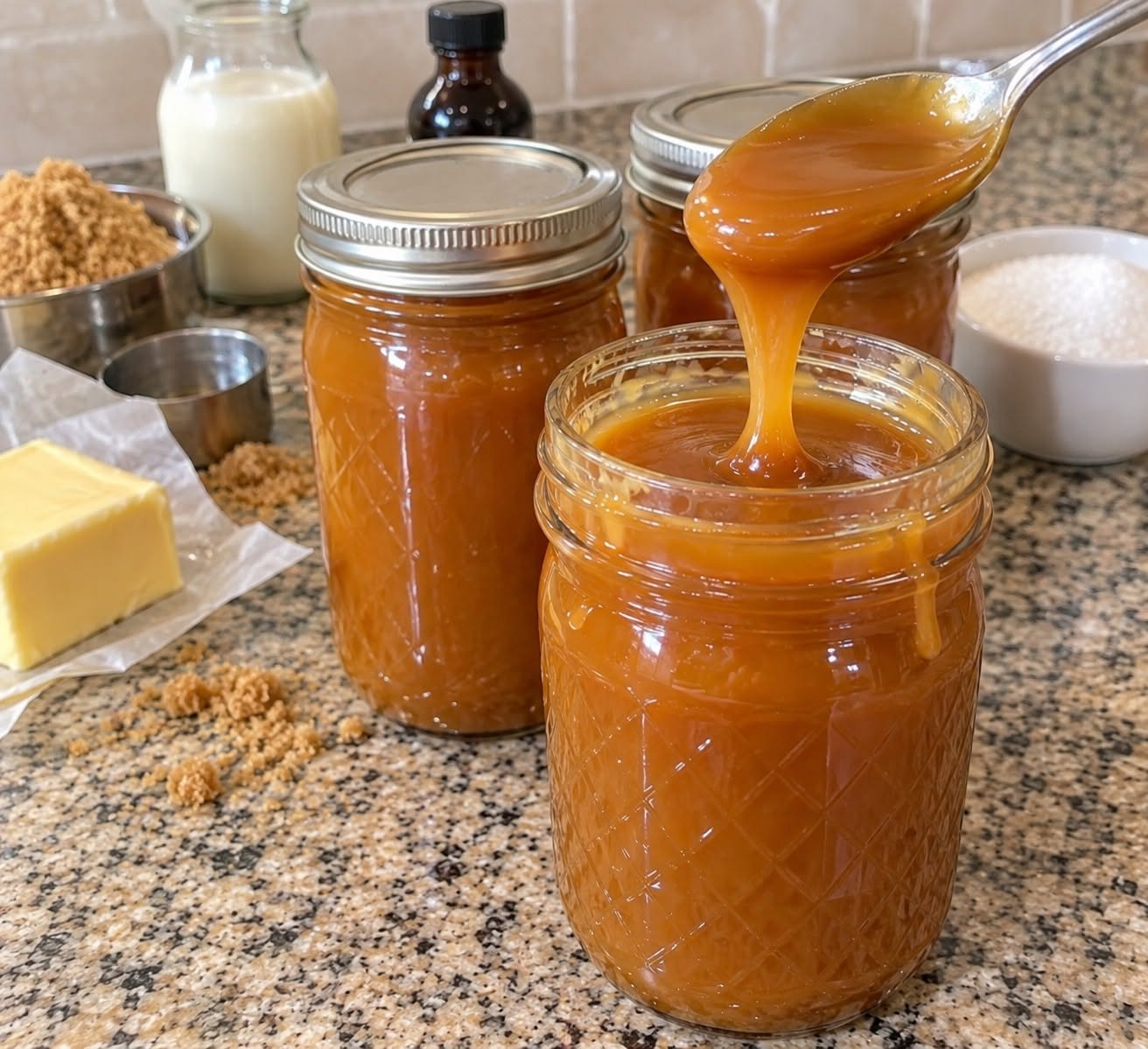
Cook the caramel until it reaches a deep, rich amber color, similar to the color of an old copper penny. This is the peak of flavor. If you prefer a milder caramel, you can remove it from the heat when it’s a lighter golden color. The whole process from the first sign of color to deep amber can take less than 2 minutes.
6. Deglaze with Cream (Carefully!):
As soon as you achieve your desired color, immediately remove the saucepan from the heat. Stand back and carefully pour in the warmed heavy cream. The mixture will bubble up violently and release a lot of steam. This is normal! Whisk constantly until the bubbling subsides and the cream is fully incorporated. The caramel will look thin at this point.
7. Add Butter and Flavorings:
Return the saucepan to low heat. Add the room-temperature butter pieces and whisk gently until they are completely melted and the sauce is smooth and glossy. This will help thicken the caramel and make it incredibly silky.
8. Finish and Season:
Remove the pan from the heat. Whisk in the vanilla extract and the optional salt. Taste the caramel (careful, it’s hot!) and adjust the salt to your liking. If you want a salted caramel sauce, you can add a bit more.
9. Cool and Store:
Pour the hot caramel sauce into a clean glass jar or container. Let it cool at room temperature for about 15-20 minutes before sealing. As it cools, it will thicken significantly. Store it in the refrigerator for up to 2 weeks. The caramel will become very firm when chilled; simply warm it in the microwave in 10-second intervals or place the jar in a bowl of warm water to loosen it up before use.
Recipe Notes, Tips & Tricks
-
Avoid Crystallization: Ensure your saucepan is perfectly clean and dry before starting. Any stray sugar crystals on the sides of the pan can cause the entire batch to crystallize. You can use a wet pastry brush to wash down the sides of the pan if you see any crystals forming during the boiling process.
-
Safety First: Caramel is extremely hot and can cause severe burns. Always use caution and keep children and pets away from the kitchen while making it. Wear an oven mitt when pouring in the cream.
-
The “Wet Method” vs. “Dry Method”: This recipe uses the wet method (adding water). The dry method (just melting sugar) is faster but easier to burn. The wet method gives you a bit more control and a more consistent result.
-
Warm Cream is Key: Adding cold cream to hot caramel can cause the mixture to seize up and splatter. Warming it helps it incorporate smoothly.
-
Room Temperature Butter: Just like the cream, cold butter can cause the caramel to seize. Room temperature butter melts evenly and creates a smoother sauce.
-
Don’t Stir the Sugar: Once the sugar is dissolved and boiling, resist the urge to stir. Swirling the pan is the best way to ensure even cooking without risking crystallization.
Nutrition Information
Please note that this is an estimate and will vary based on the exact ingredients used and the final serving size.
Serving Size: 1 tablespoon (approximately 20g)
Servings Per Recipe: About 16
-
Calories: 90 kcal
-
Total Fat: 5g
-
Saturated Fat: 3g
-
Cholesterol: 15mg
-
Sodium: 20mg (without added salt)
-
Total Carbohydrates: 11g
-
Sugars: 11g
-
Protein: 0g