-
Preparation Time: 10 minutes
-
Cooking Time: 0 minutes
-
Total Time: 10 minutes
-
Yield: Approximately 60-80ml (2-3 shots)
-
Intensity Level: High (Pungent & Potent)
-
Difficulty: Easy
Ingredients
-
2 large Yellow or Red Onions: Yellow onions are slightly sweeter, while red onions are sharper and more pungent. Choose firm, unblemished onions.
-
1-inch piece of Fresh Ginger (Optional): Adds a pleasant zing and helps soothe the stomach.
-
1 clove of Garlic (Optional): For an extra immune-boosting kick.
-
1 tablespoon of Lemon Juice (Optional but Recommended): Helps mellow the sharpness and adds Vitamin C.
-
1 teaspoon of Raw Honey (Optional): To sweeten the deal, especially for first-timers.
-
A pinch of Black Salt or Pink Himalayan Salt (Optional): Enhances flavor and provides trace minerals.
Equipment Needed
-
Sharp Chef’s Knife: Essential for clean cuts.
-
Cutting Board
-
High-Speed Blender or Food Processor
-
Fine-Mesh Strainer or Nut Milk Bag (Cheesecloth): Crucial for a smooth, pulp-free juice.
-
Mixing Bowl
-
Airtight Glass Bottle or Jar: For storage.
-
Shot Glasses
Step-by-Step Instructions
Phase 1: Preparation (Time: 5 minutes | Intensity: Low)
-
Clean and Peel: Thoroughly wash the onions. Peel off the dry outer layers and the tough root end. Rinse the peeled onions again to remove any lingering dirt.
-
Chop: Roughly chop the onions into quarters or large chunks. There is no need for fine dicing, as they will be blended.
-
Prepare Add-ins (Optional): If using, peel and roughly chop the ginger and garlic.
Phase 2: Blending (Time: 2 minutes | Intensity: Medium)
-
Combine: Add the chopped onions (and optional ginger/garlic) to your high-speed blender.
-
Blend: Pulse the blender a few times to break down the onions, then blend on high for about 30-60 seconds until you achieve a smooth, pulpy consistency. Do not add water. The onions will release plenty of their own liquid. If your blender struggles, you can add a very small splash (1-2 tablespoons) of water, but no more.
-
The “Tear Factor”: Be prepared for the fumes! The blending process releases potent sulfur compounds. Keep your face at a distance and ensure your kitchen is well-ventilated.
Phase 3: Straining (Time: 3 minutes | Intensity: Medium)
-
Set Up: Place your fine-mesh strainer over a mixing bowl. If using a nut milk bag or cheesecloth, place it inside the strainer.
-
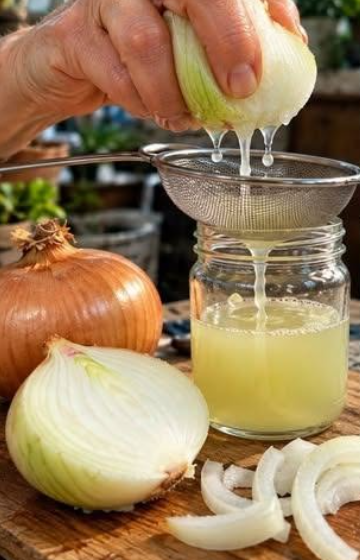
Strain: Carefully pour the onion pulp into the strainer. Using the back of a spoon, press down firmly on the pulp to extract as much juice as possible. Gather the edges of the nut milk bag and squeeze tightly to extract every last drop.
-
Discard Pulp: The remaining dry pulp can be composted or discarded.
Phase 4: Flavor Adjustment & Storage (Time: 1 minute | Intensity: Low)
-
Mix: To the collected onion juice, stir in the optional lemon juice, honey, and black salt. Taste a tiny drop to check the flavor profile.
-
Bottle: Pour the finished juice into an airtight glass bottle or jar.
-
Chill: Refrigerate immediately. The juice will keep for up to 3-4 days in the refrigerator. Always give it a good shake before use, as natural separation will occur.
How to Consume Onion Juice (The “Intensity” Guide)
Due to its powerful taste, it is not recommended to drink onion juice like a glass of water. Here are the best ways to take it:
-
The “Shot” Method (For the Brave): Pour 1-2 tablespoons (15-30ml) into a shot glass and drink it quickly, followed immediately by a chaser of water or a slice of citrus.
-
The “Mixer” Method (Recommended for Beginners): Mix 1 tablespoon of onion juice into a small glass of warm water or your morning vegetable juice. The flavor will be diluted and more manageable.
-
The “Dressing” Method: Use it as a base for a salad dressing. Whisk it with olive oil, vinegar, and herbs for a flavor-packed, healthy dressing.
Best Time to Consume: Many people prefer to take it on an empty stomach in the morning for maximum absorption of its nutrients. However, it can be consumed at any time of day.
Nutritional Information (Per 1 Tablespoon / 15ml Serving)
Please note: This is an estimate and can vary based on the size and type of onions used.
-
Calories: 10-15 kcal
-
Carbohydrates: 2-3g
-
Sugars: 1-2g
-
Protein: 0.3g
-
Fat: 0g
-
Fiber: 0g (as the pulp is removed)