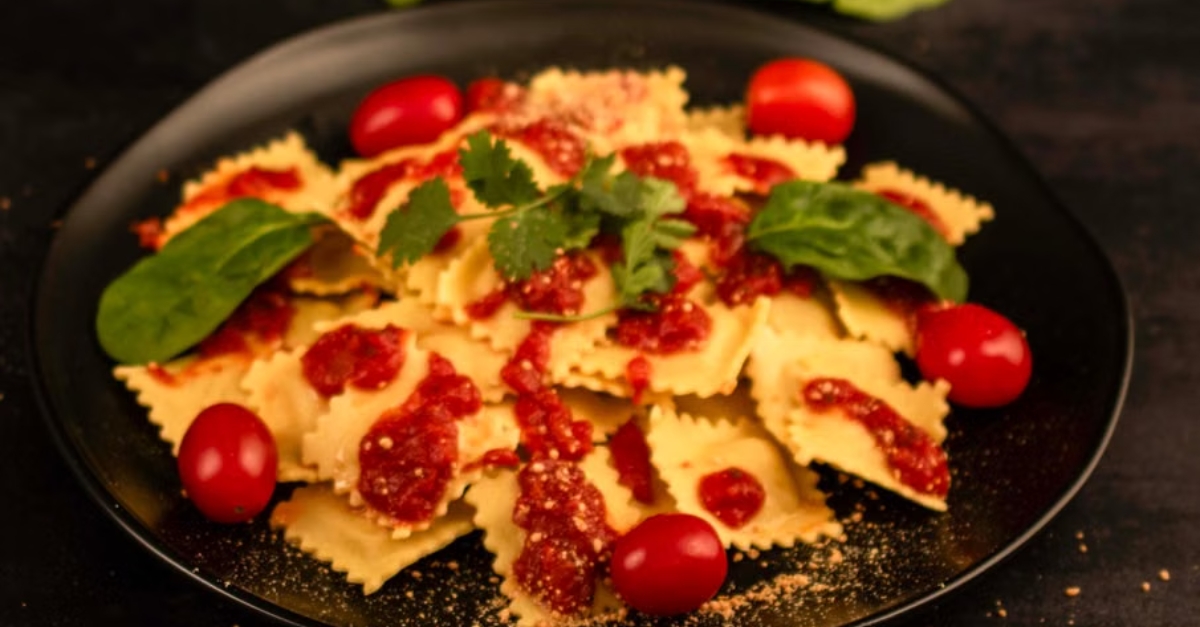
-
Prep Time: 10 minutes
-
Cook Time: 12 minutes
-
Total Time: 22 minutes
-
Skill / Intensity Level: Easy (Low Intensity)
-
Yield: 4 generous servings
-
Course: Main Dish
-
Cuisine: Italian-Inspired
Equipment Needed
-
Large pot (for boiling ravioli)
-
Colander or spider strainer
-
12-inch heavy-bottomed skillet or cast-iron pan
-
Chef’s knife and cutting board
-
Measuring spoons and cup
-
Tongs and silicone spatula
Ingredients
Main Ingredients
-
16 oz (1 lb) fresh refrigerated cheese ravioli (spinach-ricotta or four-cheese work best)
-
1 lb fresh asparagus, woody ends trimmed, cut into 1.5-inch diagonal pieces
-
2 cups fresh cherry or grape tomatoes, kept whole
-
5 cloves fresh garlic, thinly sliced or minced
-
3 tablespoons extra virgin olive oil, divided
-
2 tablespoons unsalted butter (optional, for silky richness)
Seasonings & Fresh Herbs
-
1/4 cup fresh basil leaves, chiffonade (thinly sliced)
-
1 tablespoon fresh flat-leaf parsley, finely chopped
-
1 teaspoon fresh thyme leaves
-
1/2 teaspoon crushed red pepper flakes (adjust to taste)
-
3/4 teaspoon kosher salt, plus more for pasta water
-
1/2 teaspoon freshly cracked black pepper
-
1 tablespoon fresh lemon juice (about half a lemon)
-
1 teaspoon freshly grated lemon zest
Optional Garnish
-
1/3 cup freshly grated Parmesan or Pecorino Romano cheese
-
Extra virgin olive oil for drizzling
Step-by-Step Cooking Instructions
Boiling Pasta (5-7 mins) ──► Sautéing Veggies (6-8 mins) ──► Combining & Emulsifying (2 mins)
Step 1: Boil the Pasta Water
Bring a large pot of heavily salted water (about 1.5 tablespoons of kosher salt per 4 quarts of water) to a rolling boil over high heat.
Chef’s Tip: Salting your pasta water generously is your only opportunity to season the pasta dough from the inside out.
Step 2: Cook the Ravioli
Carefully drop the fresh ravioli into the boiling water. Reduce heat slightly to a gentle boil so the pasta pockets do not burst open. Cook for 3 to 4 minutes, or until the ravioli float to the surface and become tender al dente.
Before draining, reserve 1/2 cup of starchy pasta cooking water. Drain the ravioli gently using a spider strainer or colander, drizzle with 1/2 teaspoon of olive oil to prevent sticking, and set aside.
Step 3: Sauté the Asparagus
Place a large 12-inch skillet over medium-high heat. Add 2 tablespoons of extra virgin olive oil. Once the oil shimmers, add the trimmed asparagus pieces in a single layer.
Sauté for 3 to 4 minutes until the asparagus turns vibrant bright green and becomes crisp-tender with slight golden char spots. Season with a pinch of salt and black pepper.
Step 4: Blister Tomatoes and Garlic
Reduce the skillet heat to medium. Add the remaining 1 tablespoon of olive oil along with the whole cherry tomatoes. Cook for 3 to 4 minutes, stirring occasionally, until the tomato skins begin to wrinkle and burst open, releasing their juices.
Push the vegetables to the outer edges of the skillet to clear a space in the center. Add the minced garlic, thyme leaves, and crushed red pepper flakes into the center. Cook for 60 seconds until intensely fragrant and light golden, being careful not to let the garlic brown or burn.
Step 5: Toss and Build the Pan Sauce
Melt in the 2 tablespoons of butter (if using) into the garlic and tomatoes, stirring to combine the pan juices. Stir in the lemon zest and lemon juice.
Add the cooked ravioli into the skillet alongside 3 to 4 tablespoons of the reserved starchy pasta water. Toss gently with tongs or a rubber spatula for 1 to 2 minutes over medium-low heat until the pasta is thoroughly coated in the glossy garlic-tomato glaze. If the skillet looks dry, splash in a little more reserved pasta water.
Step 6: Finish with Herbs and Serve
Remove the skillet from the heat. Fold in the fresh basil chiffonade and chopped parsley. Season with the remaining salt and freshly cracked black pepper to taste.
Plate immediately into warm shallow pasta bowls. Top with a generous sprinkle of freshly grated Parmesan cheese, a crack of black pepper, and a final light drizzle of cold-pressed olive oil.
Pro Tips for Perfect Results
-
Don’t Overcook the Ravioli: Fresh refrigerated ravioli cooks very quickly compared to dried pasta. Remove them the moment they float to prevent the cheese filling from blowing out into the water.
-
Emulsify with Pasta Water: The combination of starchy pasta cooking liquid, olive oil, butter, and burst tomato juices forms a light emulsion that clings effortlessly to the ravioli pockets without needing heavy cream.
-
Thick vs. Thin Asparagus: If using thick asparagus stalks, peel the bottom third with a vegetable peeler or slice them thin. If using thin pencil asparagus, add them a minute later so they retain a crisp bite.
Recipe Variations
-
Add Lean Protein: Top with grilled lemon-herb chicken breast, pan-seared jumbo shrimp, or crispy pancetta bits.
-
Make it Gluten-Free: Substitute fresh gluten-free cheese ravioli or tortellini; timing remains nearly identical.
-
Make it Dairy-Free/Vegan: Use plant-based ravioli, substitute the butter with extra virgin olive oil, and swap the Parmesan for nutritional yeast or dairy-free parmesan shavings.
-
Spinach or Kale Boost: Stir in 2 cups of fresh baby spinach or chopped Tuscan kale during the last 2 minutes of skillet cooking until wilted.
Storage & Reheating Instructions
-
Refrigeration: Store cooled leftovers in an airtight container in the refrigerator for up to 3 days.
-
Reheating: Reheat gently in a skillet over low heat with a tablespoon of water or broth to loosen the sauce. Alternatively, microwave on 70% power in 45-second intervals until warmed through.
-
Freezing: Cooked ravioli and fresh vegetables do not freeze well together, as the asparagus loses its texture upon thawing. Enjoy fresh for best quality.
Nutrition Facts
Servings: 4 | Serving Size: Approx. 1.25 cups
| Nutrients | Amount Per Serving | % Daily Value* |
| Calories | 420 kcal | — |
| Total Fat | 21 g | 27% |
| Saturated Fat | 7 g | 35% |
| Trans Fat | 0 g | — |
| Cholesterol | 45 mg | 15% |
| Sodium | 680 mg | 30% |
| Total Carbohydrates | 44 g | 16% |
| Dietary Fiber | 5 g | 18% |
| Total Sugars | 6 g | — |
| Protein | 16 g | 32% |
| Vitamin D | 0.2 mcg | 1% |
| Calcium | 210 mg | 16% |
| Iron | 3.2 mg | 18% |
| Potassium | 480 mg | 10% |